Kenilworth’s Safer Neighbourhood Team arrested a male on suspicion of robbery on Tuesday evening 26 May 2020 following the robbery of bicycle from a minor that took place near Kenilworth Ford, Castle Road, Kenilworth. Following the robbery, the victim made his way to the Beehive Hill/Priorsfield Road area of Kenilworth where he raised the alarm called the police. The stolen bicycle was recovered.
Warwickshire Police are interested to hear from anyone who may have been around Kenilworth Ford area, Castle Road, Kenilworth between 15.30hrs to 16.30hrs and may have seen or witnessed anything. The suspect was described as wearing a navy blue tracksuit with a white hood and black Nike trainers.
If you have any information about this incident, which is incident 298 of 26 May 2020, please contact Warwickshire Police on 101 or you can call Crimestoppers anonymously on 0800 555 111.
KENILWORTH’S Safer Neighbourhood Team is warning all householders this morning across the town and area about several individuals that have been and are calling on homes in and around Kenilworth offering to jet wash or re-tarmac household drives over the past few days.
In one incident earlier this week a Kenilworth householder was conned out several hundred pounds.
Leaflets have also been put through the doors of some homes offering these services too. Warwickshire Police are advising people to check traders out thoroughly before using them and to only use reputable contractors with a genuine postal address, landline telephone number and that Warwickshire Trading Standards can confirm are legitimate and trustworthy.
A police spokesperson said ” We need householders to follow our advice and avoid becoming a victim of this type of scam. When we get a call, it’s usually too late as the offenders will have conned the person out of what can be a considerable sum of money”.
Reports from the area suggest that a blue Ford Transit and a Silver Toyota are vehicles involved along with other vans that are touring the area, some, not all, of which have Eire (Republic of Ireland) vehicle registration number plates.
Please remain vigilant and avoid engaging doorstep callers offering these services either in person or by leaflet. Householders are further advised that if they have put pressure put on them to have any such work done by any of these individuals they should call Warwickshire Police for assistance on 101.
Due to the current social distancing restrictions as a result of the Covid-19 pandemic the local authorities have devised a way for the community to still be able to take part in activity that recognises the VE 75 Celebrations. The details are shown here:
Householders are advised to maintain vigilance around their home and area following the theft of two BMW motorcycles. Between 04.50hrs and 05.10hrs on Wednesday 29 April 2020 offenders stole two BMW motorcycles from a property at Hob Lane, Burton Green, Kenilworth.
One bike is a BMW GS 1250 – blue and white with the second motorcycle being a BMW S1000 RR also blue and white.
The offenders gained access to the motorcycles at the property by cutting a hole in the garage door. The bikes were stolen without the keys. Two vehicles were seen leaving the scene at speed and are described as being a transit type van and the other a dark-coloured saloon car. Both headed off towards Windmill Lane.
This is incident 29 of 29 April 2020
If you think you may have seen or heard anything suspicious or have any information about this incident, then please contact Warwickshire Police on 101. Alternatively, you can call Crimestoppers anonymously on 0800 555 111.
SLOW down, take extra care and stay safe on our roads – that’s the message to drivers who are seeing quieter roads as a chance to drive faster and ignore the law.
Warwickshire’s roads policing team has spoken out to remind people it is continuing to actively patrol the county’s roads to keep an eye on what drivers are doing and check vehicles are safe.
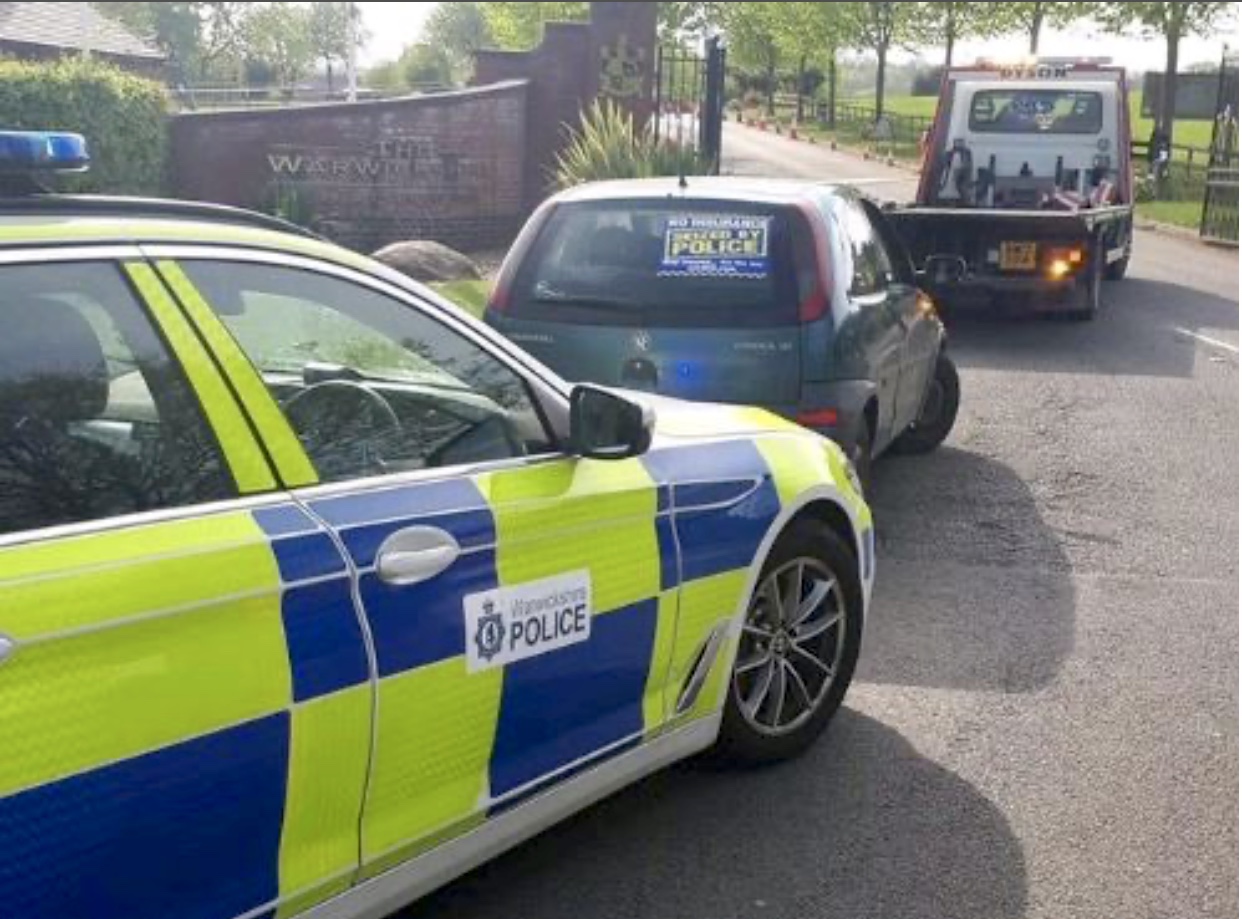
Police stop and seized a vehicle at nearby Leek Wootton
This includes looking out for uninsured drivers and anyone taking risks by speeding, using a mobile phone while driving, drink driving, or by not wearing a seatbelt.
Inspector Jem Mountford said: “We’re pleased to find a significant decrease in traffic on Warwickshire’s roads demonstrating that people are complying with the Government’s directions.
“However, it has been disappointing to see the number of uninsured vehicles and drivers who believe the quieter roads are an excuse to drive too fast putting themselves and others in danger.”
“Officers are conducting patrols to identify these offences as we’re determined to make the roads of Warwickshire as safe as possible.”
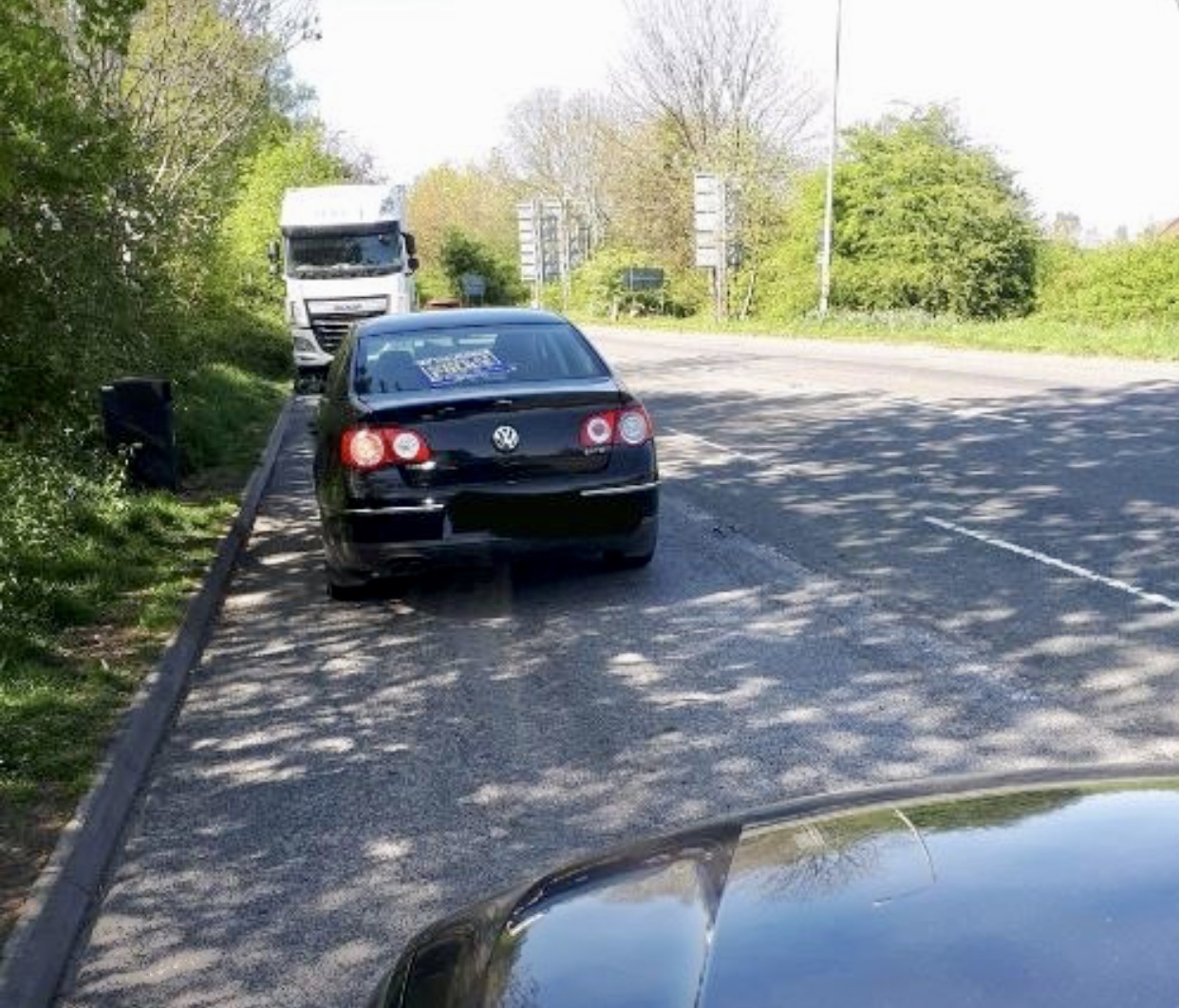
This vehicle was stopped for speeding
In the past week the Operational Policing Unit (OPU) has tweeted about some of the offences they have come across. The following are from last Thursday, 23rd April:
– OPU stopped and seized a car in Leek Wootton. The driver had no insurance and the MOT expired last year. The driver was also wanted on warrant for breach of a court order.
– OPU seized a Laguna on the A46, Warwick, earlier. The driver had no insurance or licence. Driver reported.
– Earlier the same day, officers came across a vehicle that had been uninsured since February. The driver was reported to court.
– Also posted on 23rd April, OPU was on patrol on the M69 when a vehicle decided to overtake them at excessive speed. The driver was uninsured and using trade plates which did not belong to them. The vehicle was seized and the driver reported.

 Kenilworth Watch